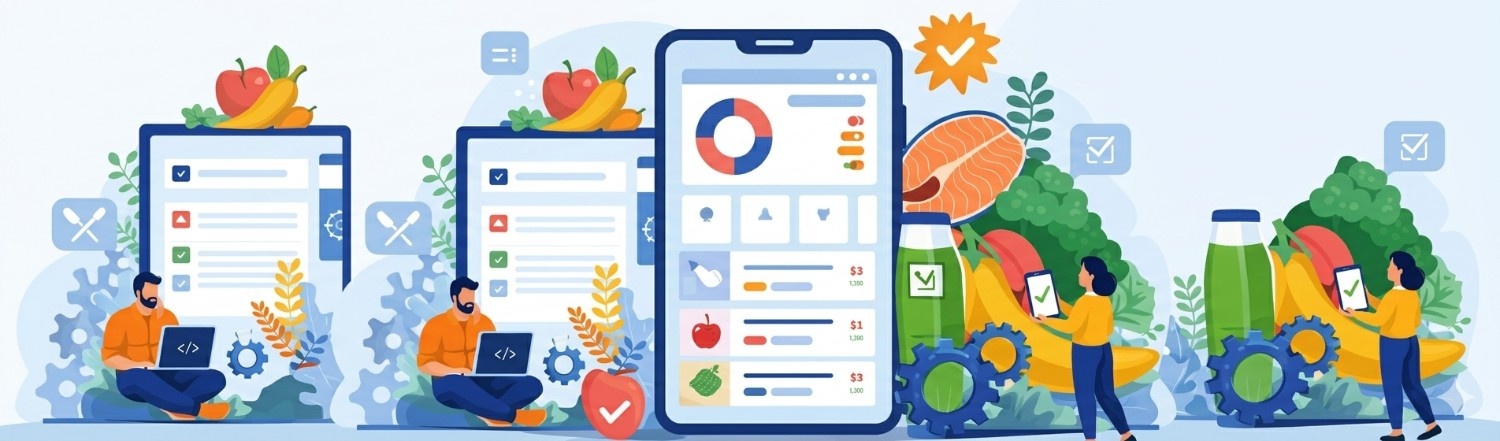
The food and nutrition industry is undergoing a massive digital transformation. The global food tech market, valued at $311 billion in 2023, is projected to exceed $650 billion by 2032 — growing at a CAGR of over 9%. From AI-powered meal planning apps to custom restaurant management platforms, technology is reshaping how food businesses operate, serve customers, and scale. If you’re a restaurant owner, nutrition startup founder, grocery retailer, or food manufacturer, investing in the right food and nutrition software development solution is no longer optional — it’s a competitive necessity.
This guide walks you through everything you need to know about custom food tech software and app development: what it is, why it matters, what to build, and how to get started.
What Is Food & Nutrition Software Development?
Food and nutrition software development refers to the process of designing, building, and deploying custom digital solutions tailored specifically for the food industry. This includes nutrition tracking app development, platforms for custom restaurant management software development, software for food supply chain optimization, and AI-driven tools for personalized meal planning.
According to a 2024 Deloitte report, over 67% of food and beverage companies have accelerated their digital transformation investments post-pandemic — with mobile apps and AI-based platforms being the top priority areas.
Unlike generic SaaS tools, custom food and nutrition app development is built around your specific business workflows, user base, and growth goals. Whether you need a customer-facing diet tracking app development solution or an internal quality control dashboard, a custom solution gives you full control over features, data, and scalability.
Why Food & Nutrition Businesses Need Custom Software
Many food businesses start with off-the-shelf tools — and quickly outgrow them. Generic platforms come with fixed features, limited integrations, and recurring licensing costs that add up over time. A Gartner survey found that over 72% of businesses that switched from generic to custom software reported measurable improvements in operational efficiency within the first year.
Custom food and nutrition software solutions, on the other hand, are engineered to match your exact operations. Here’s why it matters:
Personalization at Scale — Modern consumers expect experiences tailored to their dietary preferences, health goals, and lifestyles. Custom apps powered by AI can deliver personalized meal recommendations, calorie tracking, and ingredient substitutions in real time — something no generic tool can match at that level of depth.
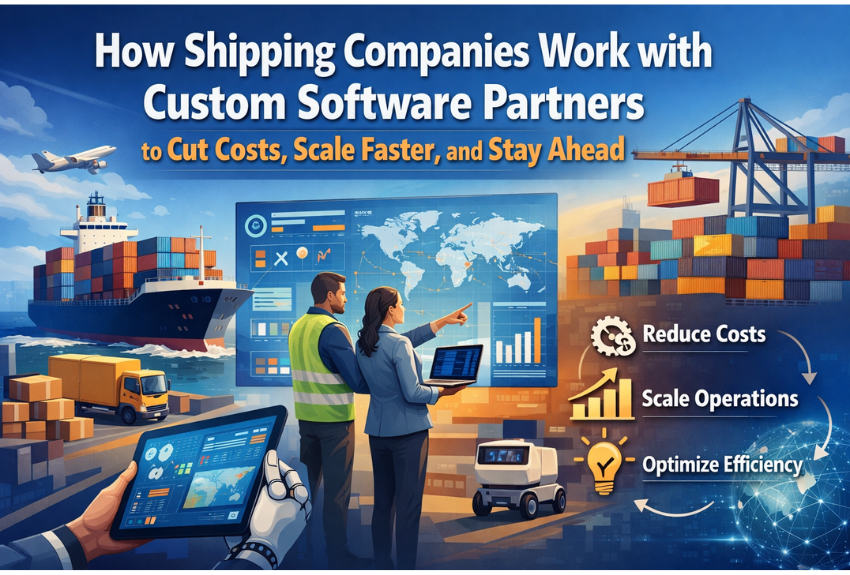
Operational Efficiency — From automated inventory alerts to AI-driven order management, custom software eliminates manual bottlenecks. Much like how AI and automation are transforming shipping industry and freight operations, the food supply chain is experiencing its own efficiency revolution — and businesses that adopt smart software early gain a lasting edge.
Data Ownership & Insights — With custom software, your business data stays yours. You can track user behavior, purchasing patterns, nutrition trends, and operational metrics — and use that intelligence to make better decisions.
Competitive Differentiation — A custom app with a great UX, smart features, and fast performance helps you stand out. The difference between turning clicks into customers or losing them often comes down to how intuitive and responsive your digital product is.
Key Types of Food & Nutrition Software Solutions
- Nutrition Tracking & Meal Planning App Development
These are consumer-facing apps that help users log meals, track macros, and receive personalized diet recommendations. The global nutrition app market was valued at $5.9 billion in 2023 and is expected to reach $12.1 billion by 2030, growing at a CAGR of 10.8%. The best AI-powered nutrition tracking apps integrate with nutrition databases like USDA Food Data, Edamam, or Nutritionix to provide accurate data across millions of food items. AI layers on top of this data to generate dynamic meal plans based on health goals, allergies, and user behavior over time.
- Custom Restaurant Management Software Development
Custom restaurant platforms can include POS systems, table management, staff scheduling, order tracking, and kitchen display systems — all in one integrated solution. The restaurant management software market is projected to grow from $4.5 billion in 2023 to $9.1 billion by 2030. When AI is layered into these systems, it enables predictive ordering, waste reduction, and smarter menu engineering based on real-time sales trends.
- Food Delivery App Development
On-demand food delivery app development services require real-time tracking, dynamic pricing, driver management, and seamless payment processing. The global online food delivery market is expected to generate revenues of $1.65 trillion by 2027, according to Statista. Custom-built delivery apps give you complete control over the customer journey — from browsing the menu to receiving the order at the door — without paying commissions to third-party aggregators.
- Food Manufacturing & Quality Control Software Development
For food manufacturers, compliance and quality control are non-negotiable. Food manufacturing software development in this space includes automated inspection workflows, traceability systems, real-time monitoring dashboards, and predictive analytics to flag safety issues before they escalate. The FDA estimates that foodborne illnesses cost the U.S. economy over $15.6 billion annually — making traceability and quality control software not just a competitive advantage, but a business-critical investment.
- Grocery & Retail Software Development
AI-driven custom grocery software development platforms can manage inventory in real time, power personalized product recommendations, and support sustainability goals through food waste tracking. Globally, one-third of all food produced is wasted, according to the FAO — a problem that smart grocery software is uniquely positioned to address. This is increasingly important as consumer expectations around transparency and sustainability grow.
The Role of AI in Food & Nutrition Software Development Services
Artificial intelligence is the engine behind the most impactful food tech solutions being built today. Here’s how AI is being applied specifically in this space:
- Personalized recommendations — AI analyzes dietary history, health data, and preferences to suggest meals, flag nutritional gaps, and adapt over time.
- Demand forecasting — Restaurants and grocery chains use AI to predict demand, reduce over-ordering, and minimize waste.
- Computer vision for quality control — AI-powered cameras on production lines can detect defects, contamination, or mislabeled packaging in real time.
- Chatbots and virtual nutrition assistants — Conversational AI embedded in nutrition apps can guide users through meal planning, answer dietary questions, and provide motivation — helping businesses turn every chat into business intelligence by capturing user intent and behavior at scale.
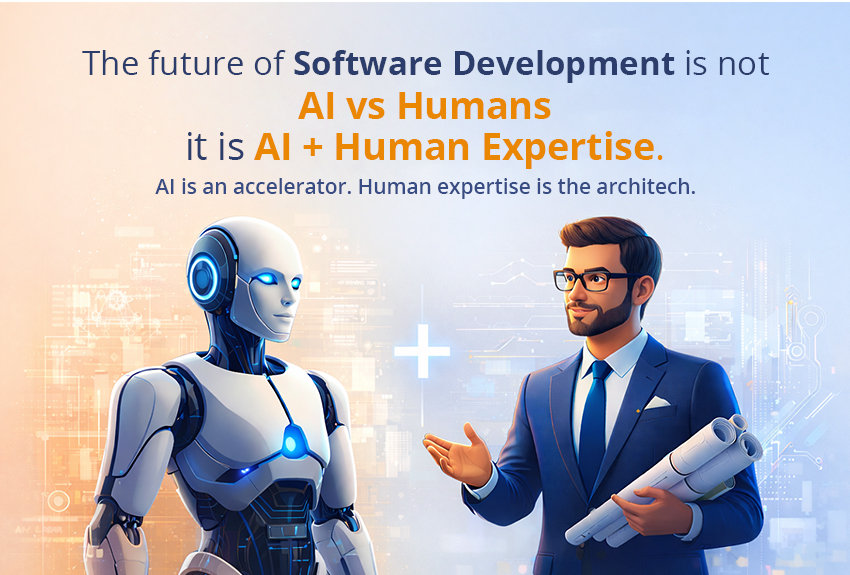
When evaluating how to build your platform, it’s worth understanding the difference between AI-powered development vs manual coding — modern AI-assisted development significantly reduces time to market while improving code quality and test coverage.
What to Look for in a Food & Nutrition Software Development Partner
Choosing the right custom software development company is one of the most critical decisions you’ll make. Here’s what to prioritize:
Domain Experience — Look for a team that has built food and nutrition products before. They’ll understand the nuances of nutrition data integration, food safety compliance, and the specific UX patterns that work for health-conscious users.
Full-Stack Capability — Your custom food app development partner should handle everything from UI/UX design and mobile development (React Native, Flutter) to backend engineering (Node.js, Python) and AI/ML integration — so you’re not stitching together multiple vendors.
Post-Launch Support — Building the app is just the beginning. Ongoing maintenance, security patches, performance monitoring, and feature updates are essential. Studies show that post-launch bugs and performance issues account for nearly 40% of app abandonment in the first 90 days — making a reliable support partner critical.
Data Security Practices — Food and nutrition apps handle sensitive health data. Strong security practices — including encrypted storage, secure APIs, and role-based access — are non-negotiable. The role of security in modern web application development services has never been more important, especially as data privacy regulations continue to tighten globally.
Transparent Process — A good food tech software development partner keeps you informed at every stage through clear communication, sprint reviews, and demos — even if you have no technical background.
How Long Does It Take to Build a Food & Nutrition App?
Timelines vary based on complexity:
- MVP (Minimum Viable Product): 2–4 months — core features, basic UI, one platform (iOS or Android)
- Full-Featured App: 4–8 months — multi-platform, AI integration, third-party APIs, admin dashboard
- Enterprise Platform: 8–12+ months — complex workflows, multiple user roles, full compliance, custom infrastructure
Starting with an MVP allows you to validate your idea with real users before investing in the full build — a strategy that reduces risk and accelerates learning.
Final Thoughts
The food and nutrition industry is at an inflection point. Over 3.8 billion people worldwide now use smartphones, and mobile health and nutrition app downloads grew by 45% between 2021 and 2024. Consumer behavior is shifting toward personalization, transparency, and digital convenience — and businesses that build the right technology infrastructure now will be best positioned to lead.
Whether you’re building a nutrition tracking app from scratch, modernizing an outdated restaurant management system, or launching an AI-powered grocery platform, the right custom software partner makes all the difference.
At OpenSource Technologies (OST), we’ve spent 14+ years building custom software and mobile applications across industries. Our food and nutrition development team combines deep technical expertise with a clear understanding of what it takes to build products that users love and businesses can scale on.
Ready to build? Get in touch with our team for a free consultation and let’s turn your food tech idea into reality.