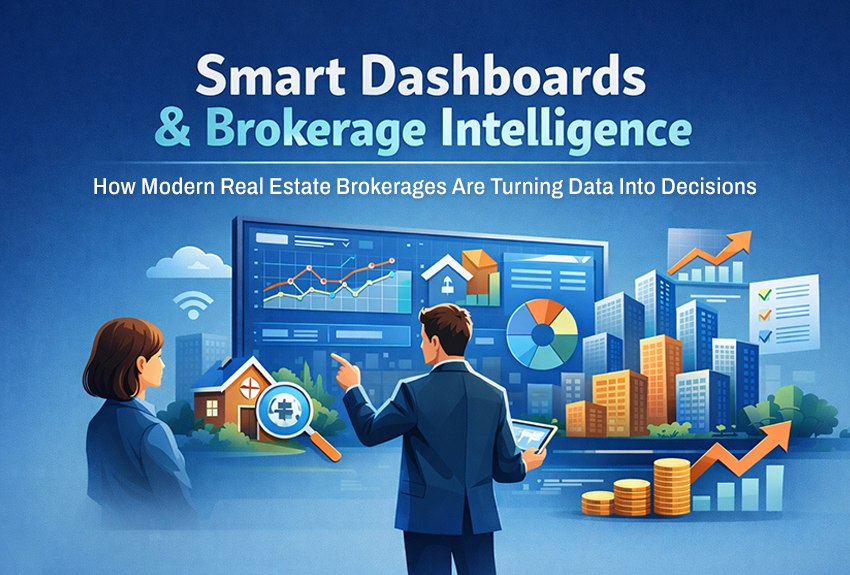
The real estate industry is in the midst of a digital transformation powered by software innovation and artificial intelligence (AI). From smarter listing platforms to predictive analytics for property valuation and tenant behavior, real estate tech has moved well beyond simple MLS (Multiple Listing Service) websites. In this blog, we’ll explore why custom software and “AI real estate software development” are essential for modern real estate businesses — and how a real estate software development company can unlock growth, efficiency, and competitive advantage.
Real Estate Technology Market in 2025 — Industry Snapshot
The real estate industry continues to undergo rapid digital transformation, driven by increased adoption of cloud platforms, data-driven decision-making, and artificial intelligence. Below is an overview of key market segments and trends shaping real estate technology in 2025.
Global Software & PropTech Growth
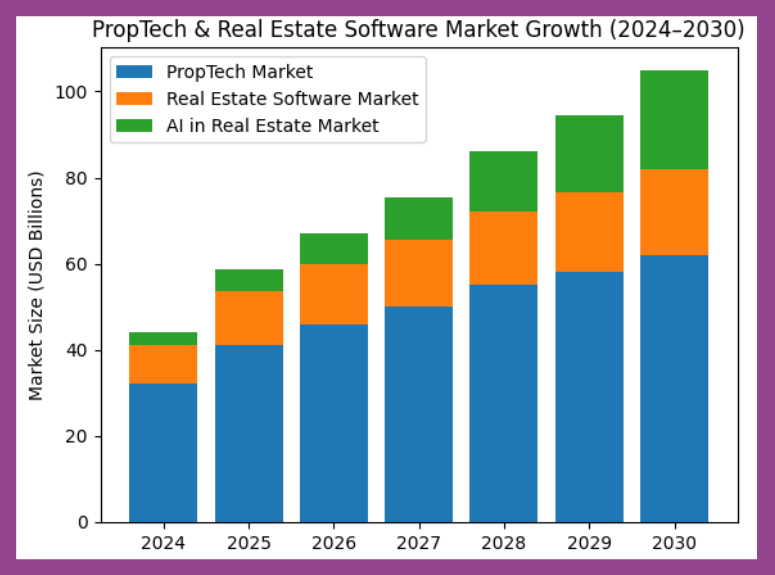
Property technology (PropTech) has emerged as a major growth sector within real estate. The global PropTech market is expected to exceed $41.26 billion in 2025, expanding at an estimated 14.4% compound annual growth rate (CAGR). This growth is largely driven by demand for digital tools that improve listing management, marketing automation, portfolio analytics, and operational efficiency across real estate agencies and property management firms.
In parallel, the broader real estate software market is projected to reach approximately $12.7 billion in 2025, supported by increased adoption of cloud-based solutions and customized software platforms tailored to specific business workflows.
AI Adoption in Real Estate
Artificial intelligence is becoming a core component of modern real estate platforms. The AI in real estate market is expected to grow steadily through the remainder of the decade, with applications spanning:
- Automated property valuation models
- Predictive analytics for pricing and demand
- Tenant and buyer behavior analysis
- Workflow automation and operational optimization
As data availability increases, AI-driven insights are playing a growing role in decision-making across residential and commercial real estate.
Property Management Software Adoption
Digital adoption is particularly strong within property management. Studies indicate that approximately 67% of property management companies already rely on specialized software platforms to manage operations such as leasing, maintenance, and rent collection. Additionally, nearly 65% have implemented AI-driven tenant screening and lease automation tools to improve efficiency and reduce risk.
The global property management software market is projected to grow from around $26.55 billion in 2025 to more than $50 billion by 2032, reflecting sustained demand for scalable and intelligent management solutions.
Real Estate CRM Market
Customer relationship management (CRM) systems are increasingly central to real estate sales and brokerage operations. The real estate CRM software market is expected to exceed $5 billion by 2026, as firms invest in platforms that streamline lead management, client communication, deal tracking, and analytics.
CRM adoption is being driven by the need for improved client engagement, better data visibility, and tighter integration with marketing and listing platforms.
Why Real Estate Leaders Need Custom Solutions
The above data shows that real estate professionals are increasingly investing in tech. But off-the-shelf tools aren’t always enough — especially for larger agencies, CRE (commercial real estate), or enterprise property managers.
Here’s why businesses are choosing custom proptech development:
1. Tailored Workflows
No two real estate businesses operate in the same way. Lead sources, sales pipelines, approval processes, and portfolio structures vary widely across firms.
Custom platforms are designed around your exact workflows, ensuring that technology adapts to your business—rather than forcing your team to conform to rigid, predefined software processes. This results in higher adoption rates and smoother daily operations.
2. Unified Systems and Centralized Data
Many real estate teams rely on multiple disconnected tools for CRM, accounting, marketing, property management, and reporting. This fragmentation often leads to data silos, manual work, and inconsistent insights.
A custom-built solution unifies these systems into a single, centralized platform, providing:
- A consolidated view of leads, clients, properties, and transactions
- Seamless data flow between departments
- Improved reporting accuracy and real-time visibility
3. AI-Driven Insights and Automation
Custom AI models unlock advanced capabilities that generic platforms cannot fully support. These include:
- Predicting pricing trends and market demand using historical and real-time data
- Scoring and prioritizing leads based on behavior, intent, and engagement signals
- Automating tenant communication and service requests, reducing response times
- Generating AI-optimized marketing content and virtual tours to improve listing performance
AI-driven automation helps teams make faster, more informed decisions while reducing operational friction.
4. Increased Sales, Better Lead Management, and Faster Actions
Custom real estate platforms directly contribute to revenue growth and efficiency by:
- Improving lead qualification and follow-up, resulting in higher conversion rates
- Ensuring no leads are lost due to manual handoffs or system gaps
- Enabling real-time alerts and automated actions, allowing teams to respond instantly to opportunities
With clearer data and faster workflows, sales teams can focus more on closing deals and less on administrative tasks.
5. Operational Efficiency and Man-Hour Savings
Automation significantly reduces manual effort across routine tasks such as data entry, reporting, scheduling, and communication. As a result:
- Teams save substantial man-hours each week
- Errors caused by manual processes are minimized
- Staff productivity improves without increasing headcount
This efficiency allows organizations to scale operations while controlling costs.
6. Sustainable Competitive Advantage
AI adoption is no longer experimental—it is becoming a key competitive differentiator. Real estate firms that leverage custom AI-powered platforms consistently report:
- Faster response times
- Higher client satisfaction
- More efficient operations
These advantages often enable them to outperform competitors who continue to rely on manual processes or generic software tools.
Key Areas Where We Help Real Estate Firms
As a real estate software development company, we specialize in building custom digital products that transform operations:
🔹 Custom Real Estate Platforms
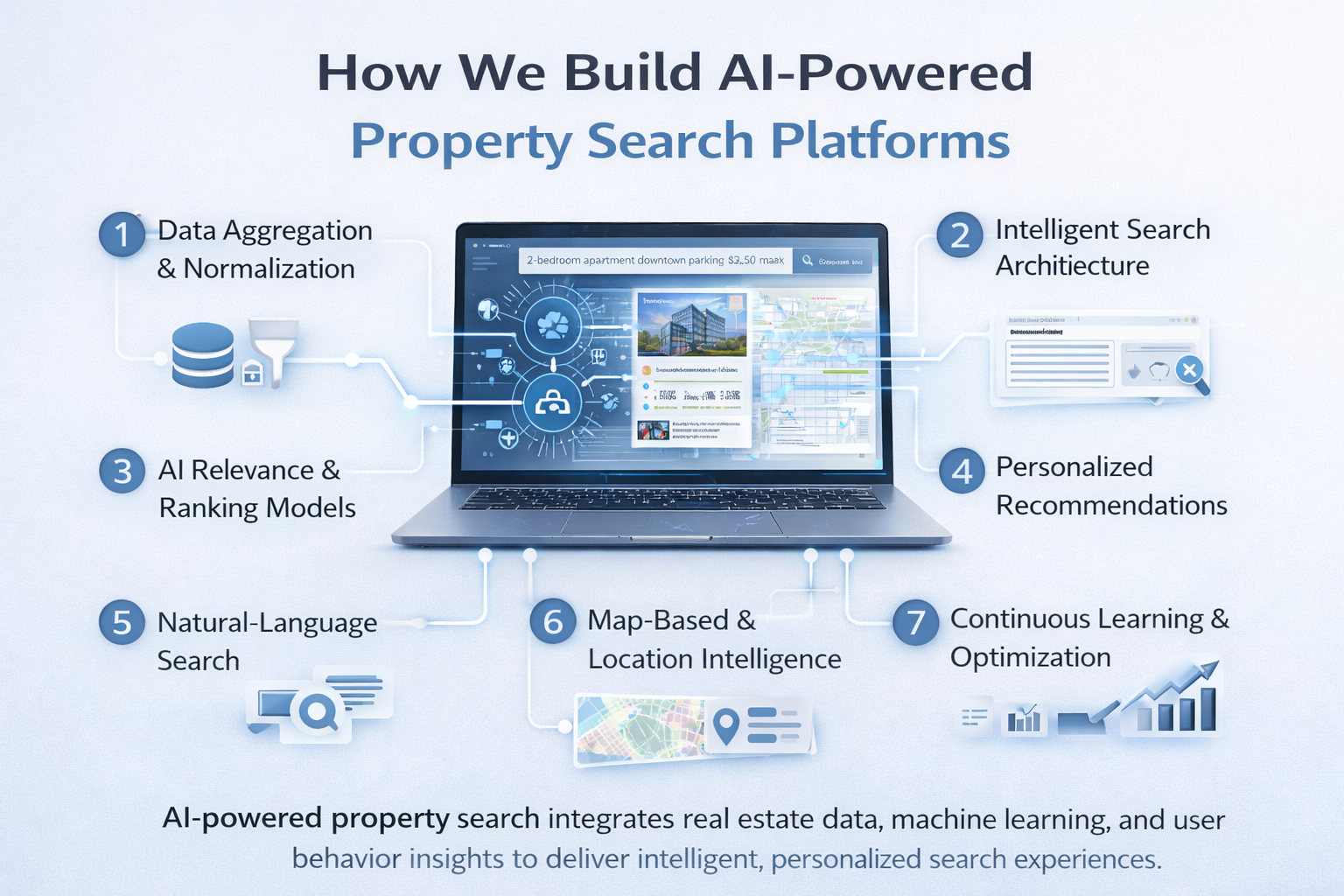
We can help you build real estate platform solutions that go beyond listings — with AI search, analytics, and portfolio insights.
🔹 AI Real Estate Software Development
From predictive valuation engines to AI-powered chatbots and tenant analytics, we design systems that:
- Increase conversions
- Reduce administrative burden
- Forecast market opportunities
🔹 Property Management Software Development
Automate rent collection, maintenance workflows, tenant onboarding, lease renewals, and reporting — custom built for your operational model.
🔹 Real Estate CRM Development
Track leads, clients, deals, and referrals in a personalized CRM tailored to your sales process, with AI scoring and automation.
🔹 Custom PropTech Development
Whether you’re a traditional brokerage, a CRE firm, or a large property group, we build tailored solutions that scale with your business.
Real Estate Software Growth Compared to Other Industries
Diagram: PropTech & Real Estate Software Market Growth (2024–2030)
Why Local Real Estate Firms Should Care
Real estate firms face increasing pressure to respond faster to leads, manage growing data and listings, and deliver a modern digital experience. Custom software and AI-powered platforms help streamline operations, improve lead management, and enable faster, data-driven decisions—without increasing manual effort.
By using localized data, automation, and AI insights, firms can improve sales performance, reduce response times, and stay competitive against businesses relying on legacy systems.
For firms in Towamencin, PA, Montgomery County, and nearby areas, proximity to OpenSource Technologies adds value through in-person collaboration, faster communication, and on-site support when needed. This ensures solutions are practical, scalable, and aligned with real-world business needs.
This close working relationship helps ensure that technology solutions are not only technically sound but also well-aligned with real-world business needs and local market conditions.
Real estate is increasingly data-driven — and local firms using software and AI outperform competitors tied to legacy systems.
Final Thoughts
The real estate industry is evolving rapidly — and technology is no longer optional. From automated workflows and AI pricing insights to end-to-end digital platforms, firms that embrace custom tech will lead the next decade.
If you want to build a real estate platform, invest in AI real estate software development, or create tailored systems for property managers, brokers, or CRE divisions — partnering with a focused real estate software development company is your fastest way to deliver innovation and scale.