Artificial Intelligence (AI) isn’t just a buzzword — it’s increasingly woven into the fabric of everyday life. From voice assistants to personalized recommendations to smart productivity tools, AI is changing how we make decisions, manage time, and complete routine tasks. What once felt experimental or futuristic is now a regular part of daily life, often working quietly in the background.
According to a recent Pew Research survey, a majority of U.S. adults interact with AI at least several times a week, and many are willing to let AI assist them with day-to-day activities. Whether it’s getting directions, filtering emails, organizing schedules, or receiving content recommendations, AI has become part of how people navigate modern life.
Artificial Intelligence & Daily Decision-Making
Everyday life is full of small decisions — what to wear, how to organize your day, what to prioritize, and even how to plan meals. While each decision may seem minor, collectively they create mental fatigue. AI can help simplify this process by recognizing patterns in your preferences and habits and offering suggestions that reduce the effort required to decide.
Today, AI-powered apps assist with everyday tasks by helping bridge the gap between your goals and your wardrobe, calendar, or task lists. By learning from past behavior, these tools can offer context-aware recommendations, such as reminding you of deadlines, suggesting optimal times for meetings, or proposing actions based on your routines. Over time, this support helps reduce decision fatigue and makes daily planning more efficient.
AI and Wardrobe Organization — A Practical Example
Imagine an app that suggests outfits based on what’s already in your closet. AI can help by:
- Recognizing colors, fits, and styles from photos
- Recommending outfits based on weather or events
- Rotating looks to avoid repeat outfits
- Helping you maximize the use of your existing clothing
These applications aren’t science fiction — AI stylist tools are increasingly being discussed in fashion tech circles for their ability to personalize clothing recommendations and even anticipate fashion trends.
AI in Everyday Routines
AI is already working behind the scenes in many commonly used applications, often without drawing attention to itself. Examples include:
- Voice assistants like Siri and Alexa recommend the best route or weather-appropriate clothing
- Calendar apps use AI to suggest meeting times
- Email tools filter messages and suggest replies
- Navigation tools optimize routes based on real-time traffic
In consumer surveys, more than 77% of people report using an AI-powered feature, even if they don’t consciously identify it as AI. This highlights how seamlessly artificial intelligence has blended into everyday digital experiences, making tasks faster and more intuitive.
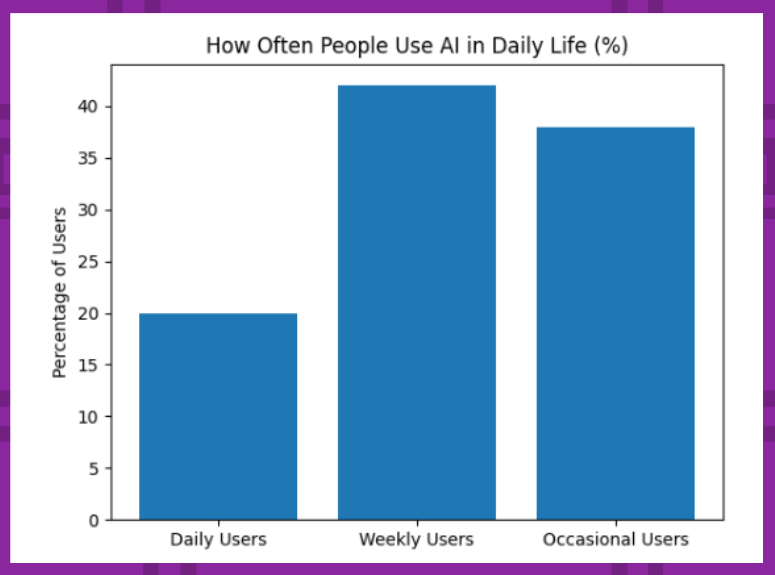
AI Awareness and Interaction
Awareness of AI varies, but overall engagement is high. Many people use AI-powered tools without actively labeling them as artificial intelligence. For example:
- 62% of U.S. adults say they interact with AI at least several times a week through tools like search, recommendations, and voice assistants.
- Around 66% of people globally report using AI regularly, with hundreds of millions engaging daily with AI tools like chatbots and assistants.
These figures highlight how integrated AI has become in both professional and personal spheres. As AI tools become easier to use and more accessible, interaction continues to grow across different age groups and industries.
Artificial Intelligence for Productivity & Life Management
AI doesn’t just help with specific tasks — it can improve overall productivity. Many people now rely on AI to:
- Automate routine work and administrative tasks
- Help prioritize schedules and manage deadlines
- Summarize emails, documents, and meeting notes
- Offer personalized suggestions based on historical data and behavior
In the workplace, tools such as ChatGPT, Perplexity and Gemini are increasingly used to draft content, brainstorm ideas, and synthesize information. This allows employees to spend less time on repetitive tasks and more time on strategic or creative work, improving efficiency without replacing human decision-making.
Reducing Mental Load With AI
One of AI’s greatest benefits is its ability to reduce mental load — the background effort of planning, remembering, and organizing. When AI manages repetitive decisions and reminders, people are better able to:
- Focus on meaningful and high-value work
- Reduce stress caused by constant planning and multitasking
- Free up cognitive resources for creative thinking and problem-solving
By offloading routine tasks, AI supports mental clarity rather than replacing human judgment. This balance helps people feel more in control of their time and energy.
The Growing Role of AI in Daily Life
As AI technology continues to evolve, its role in everyday routines is expected to become more seamless and personalized. In the near future, AI tools may:
- Manage daily schedules based on habits and preferences
- Suggest outfits directly from personal wardrobes
- Assist with meal planning, travel arrangements, and fitness routines
What was once optional or experimental is increasingly becoming part of how people manage daily responsibilities. The focus is shifting from novelty to usefulness, with AI designed to support real-life needs.
Final Thoughts
AI is no longer confined to research labs or elite tech tools — it’s already embedded into how people live, work, and decide. When used thoughtfully and ethically, AI can reduce daily effort, improve decision-making, and open up more time for what people value most.
As research shows, many people are already interacting with AI regularly, and its role in daily routines is only expected to expand.